Case Study • Preventive Healthcare • 2024
Arexpal: Designing a Lifeline for Preventive Health
Transforming clinical cancer-prevention guidelines into intuitive, sustainable daily habits through empathetic UX and ethical behavioral design.
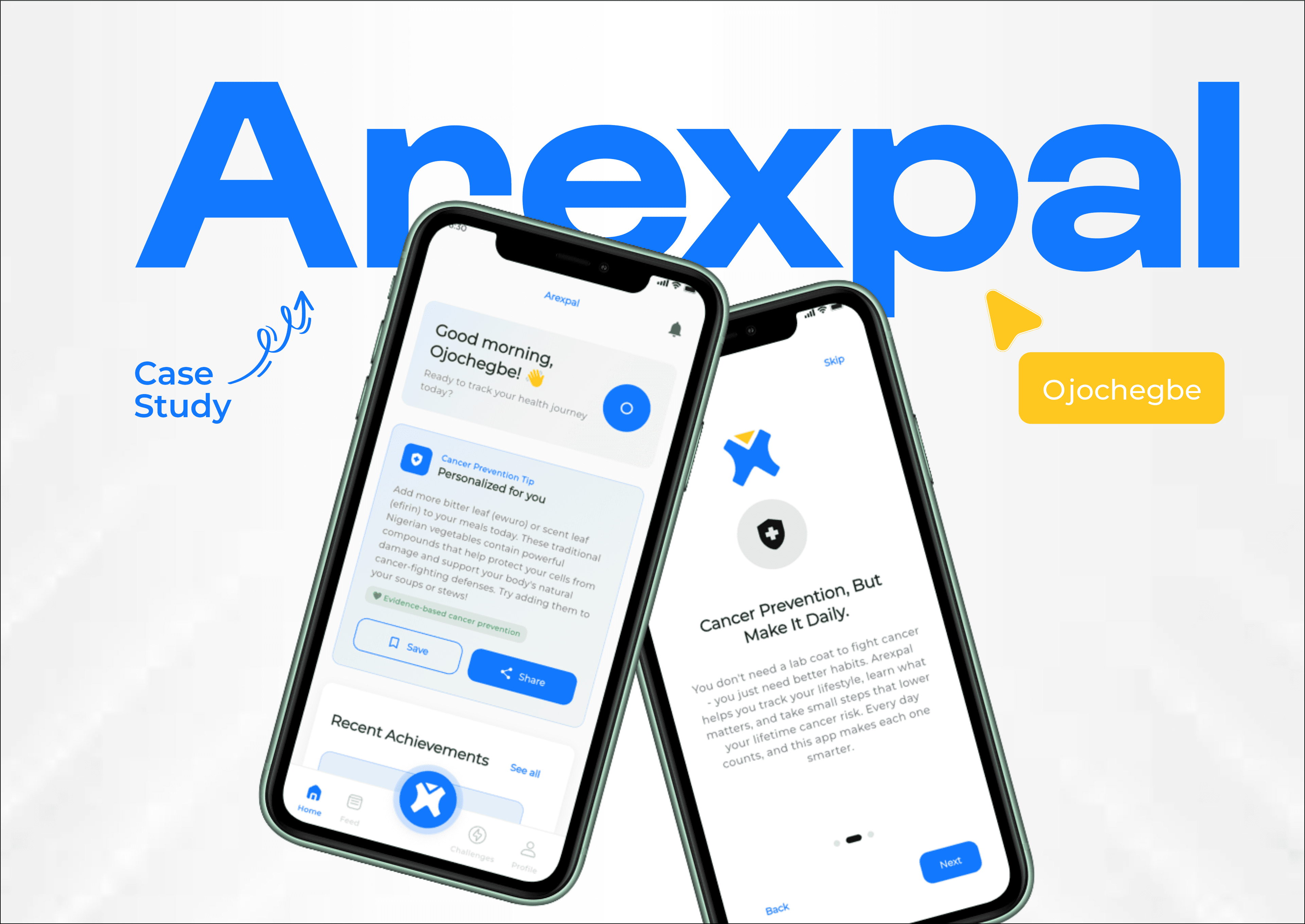
Up to 40% of cancers are preventable through manageable lifestyle modifications across diet, physical movement, sun exposure, and substance moderation. Yet public health advice remains largely locked behind clinical jargon, sporadic clinic campaigns, and guilt-driven warnings.
The objective with Arexpal was not to build another sterile medical tracker, but an everyday companion that respects human psychology—using micro-learning, conversational reflection, and positive reinforcement to make self-care feel effortless and dignifying.
The Fundamental Challenge: Access vs. Action
Early research revealed that the barrier to preventive health is twofold: people either cannot access trustworthy guidance, or when they can, that knowledge fails to translate into lasting habit change.
01. The Access Gap
Geographic distance to healthcare facilities and the cost of private consultations make preventive advice a privilege. The digital alternative—searching the open web—often yields contradictory, frightening, or unverified claims that induce anxiety rather than clarity.
02. The Action Gap
Human cognition heavily discounts long-term rewards. Knowing that tobacco is harmful or that sleep is vital rarely offsets the immediate stress relief of an unhealthy habit. Without immediate, encouraging feedback loops, good intentions consistently deteriorate.
“How might we turn preventive health from a scary, forgettable chore into an active, positive daily routine on the one device people carry everywhere?”
Research & Four Behavioral Friction Points
We interviewed 20 individuals across Nigeria and audited 30 existing health apps to pinpoint why wellness tools suffer steep 30-day drop-offs. Four recurring psychological blockers emerged:
Distrust & Information Chaos
Without a trusted source, users cycle through contradictory claims online, ultimately discarding all recommendations out of frustration.
“One site says coffee prevents cancer, another says it causes it. Who do I even trust?”
Cognitive Overload
Clinical whitepapers and dense medical articles demand too much mental energy from users who are already fatigued by daily work and life.
“A health app gave me a 20-page article on antioxidants. I read one paragraph and deleted it.”
Delayed Reward Discounting
Preventive benefits materialize over decades, whereas poor habits provide instant gratification. Abstract future benefits fail to sustain motivation today.
“The reward of quitting smoking feels years away, but a cigarette is instant relief right now.”
The Guilt-Driven Experience
Traditional trackers function like stern doctor appointments—shaming users when they miss a day, which accelerates uninstalls.
“It felt like a doctor nagging me. When I missed a day, I just felt guilty and stopped opening it.”
Three Behavioral Archetypes
Rather than generic demographic descriptions, each persona represents a distinct emotional stance toward health guidance:
Zainab, 18
Student • Lagos
Navigating new independence with late-night food and social drinking. Thinks cancer is an issue solely for older adults.
UX Priority: Snackable micro-tips, peer challenges, and lighthearted gamification.
David, 35
Software Developer • Abuja
Sedentary desk worker managing work stress and family time. Wants actionable routines without complex lifestyle overhauls.
UX Priority: One-tap rapid logging, verified medical sources, and zero cognitive drag.
Aisha, 52
Retired Teacher • Ibadan
In remission from breast cancer. Experiencing recurrence anxiety and seeking gentle, emotionally supportive habit guidance.
UX Priority: Warm, destigmatized language, conversational reflection, and reassurance.
Information Architecture: The Core Habit Loop
We organized the entire product around a continuous psychological loop: Learn • Reflect • Act. A flat structure ensures any core feature is accessible in a single tap.
Home Dashboard
Personalized daily greeting, streak status, quick reflection shortcut, and AI hero tip of the day.
Feed (The Library)
Modular Tip Cards personalized by AI, category filters (Nutrition, Sleep, Sun Safety), and source citations.
Diary (The Core)
Anchored as the central Floating Action Button. Guided conversational prompts replace blank text boxes.
Challenges
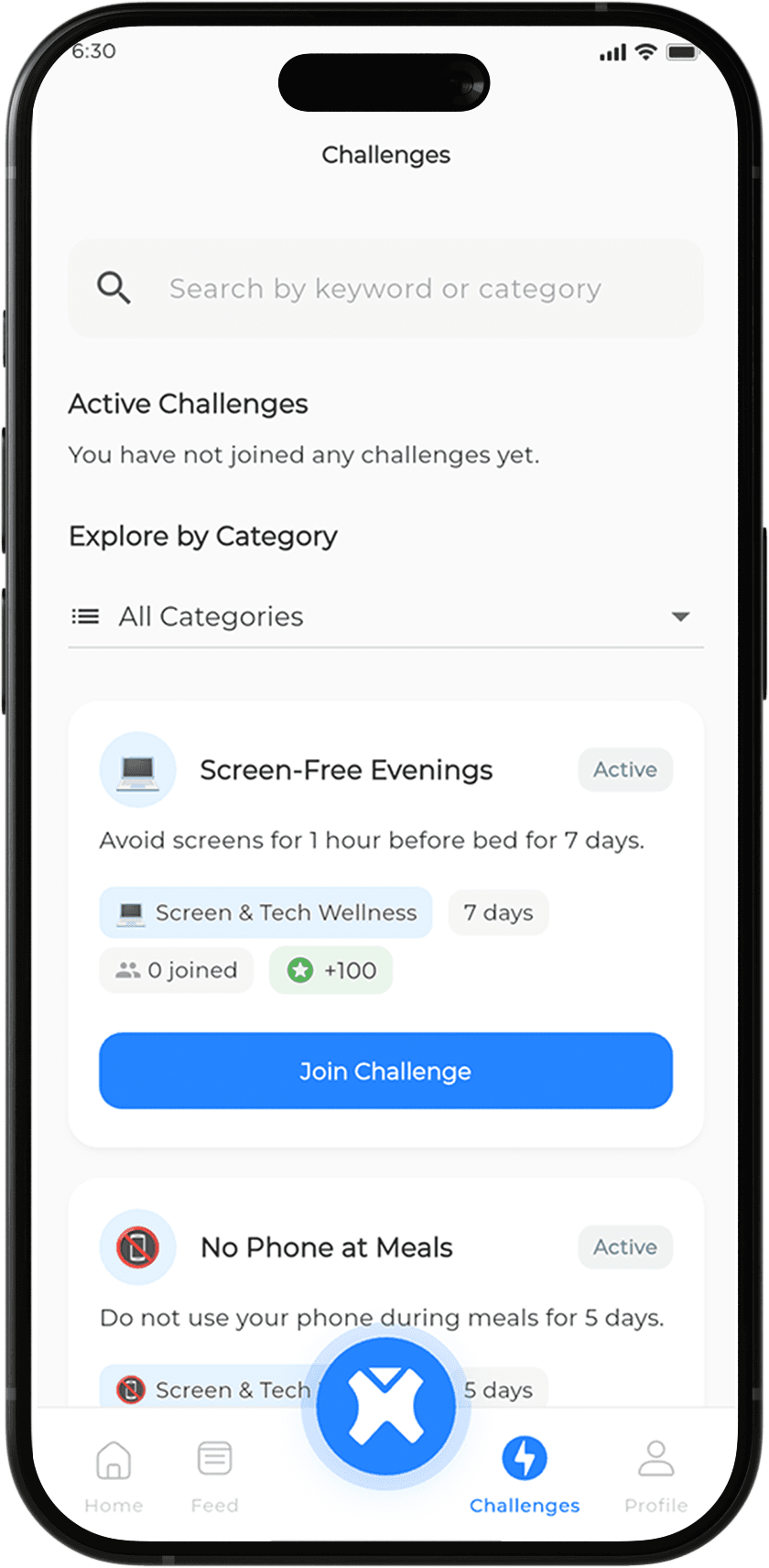
Bite-sized 5-day to 14-day community missions that convert knowledge into tangible social habits.
The Solution: Health Education That Feels Human
Arexpal solves the behavioral gap through three foundational design pillars, powered by an ambient intelligence layer that works quietly in the background.
Cognitive Ease
Information is delivered in snackable, jargon-free “Tip Cards”. Navigation is flat and predictable, dramatically reducing cognitive fatigue.
Sub-5-second scanning • 1 concept per card
Emotional Design
Warm visual language, supportive conversational prompts, and celebratory milestones replace the sterile, scolding aesthetic of traditional medical apps.
Empathetic feedback • Reassuring tone
Behavioral Stickiness
Ethical gamification—streaks, community challenges, and the Zeigarnik effect—bridges the gap between delayed benefits and immediate motivation.
Positive reinforcement • Habit loops
The Ambient Intelligence Engine
The AI does not show off algorithmic complexity; it acts as an invisible editor. It analyzes persona goals, local Nigerian culinary habits, and past diary logs to dynamically surface relevant tips, prompts, and reminders.
Core Screens Walkthrough
How the architectural principles translate into actual production surfaces designed for clarity and emotional safety.
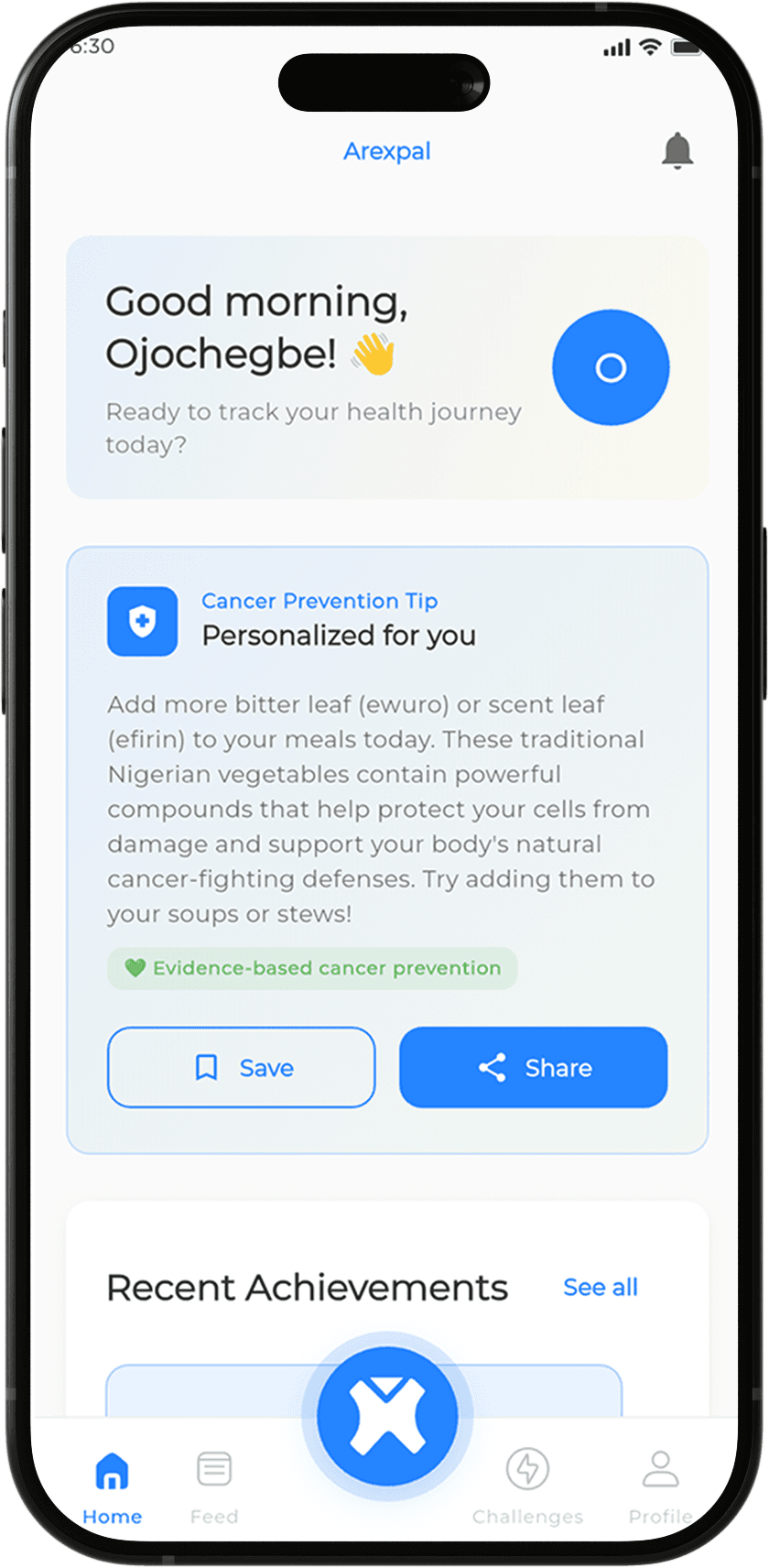
Home: Daily Encouragement
Designed for a sub-5-second glance. Features a personalized morning greeting, active streak counters, and a single hero micro-learning card. It provides a gentle nudge toward daily reflection without feeling like a task manager.
UX Rationale: Prevents cognitive overload by prioritizing one clear daily takeaway over medical metrics.
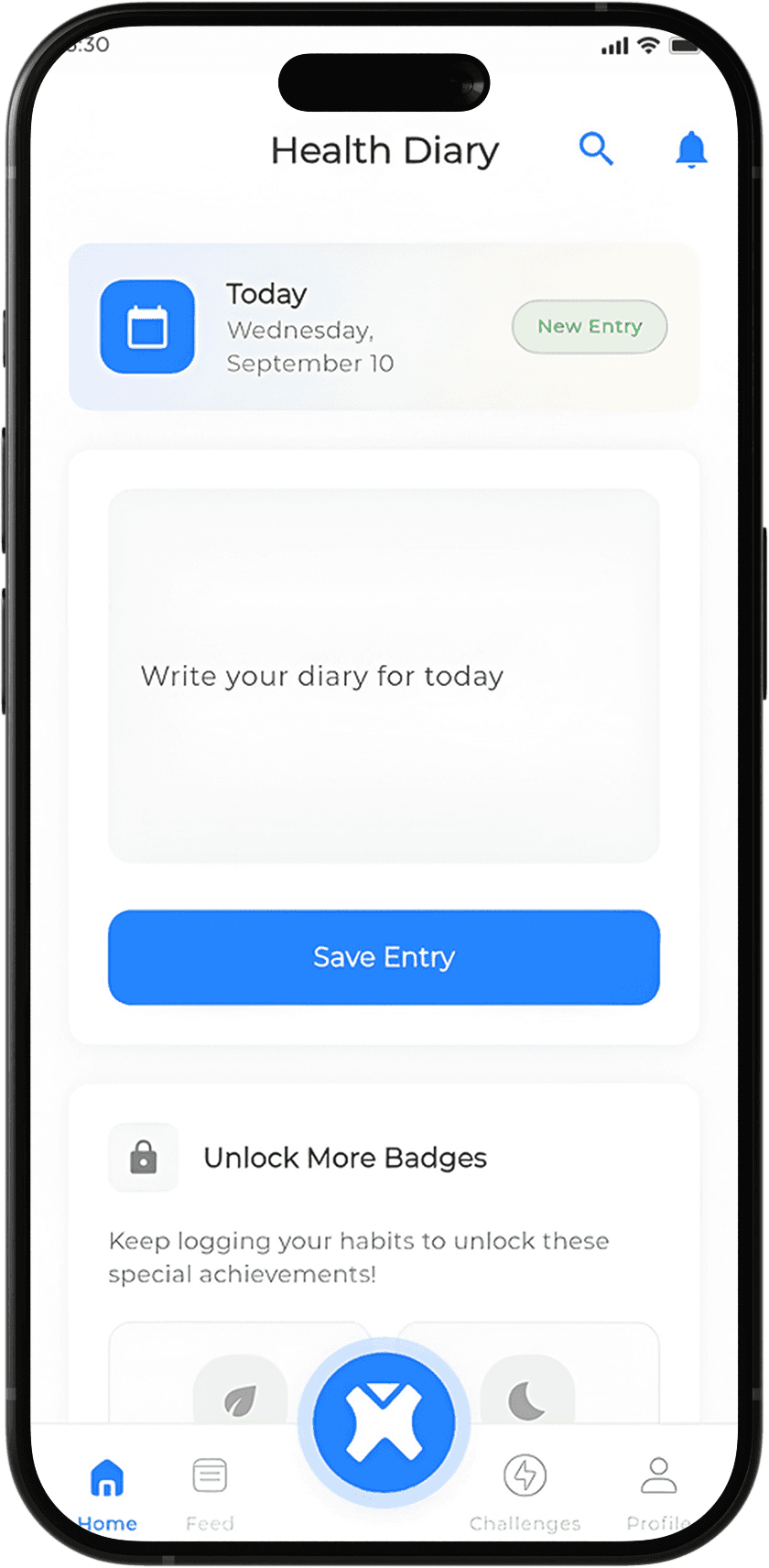
Diary: Guided Conversation
Traditional journaling presents an intimidating blank field. Here, smart prompt carousels (e.g. “Did you eat fresh fruit today?”) allow quick chip selections, turning recall into easy choice-based interactions.
UX Rationale: Lowers the cognitive threshold of reflection, keeping daily logging under 15 seconds.
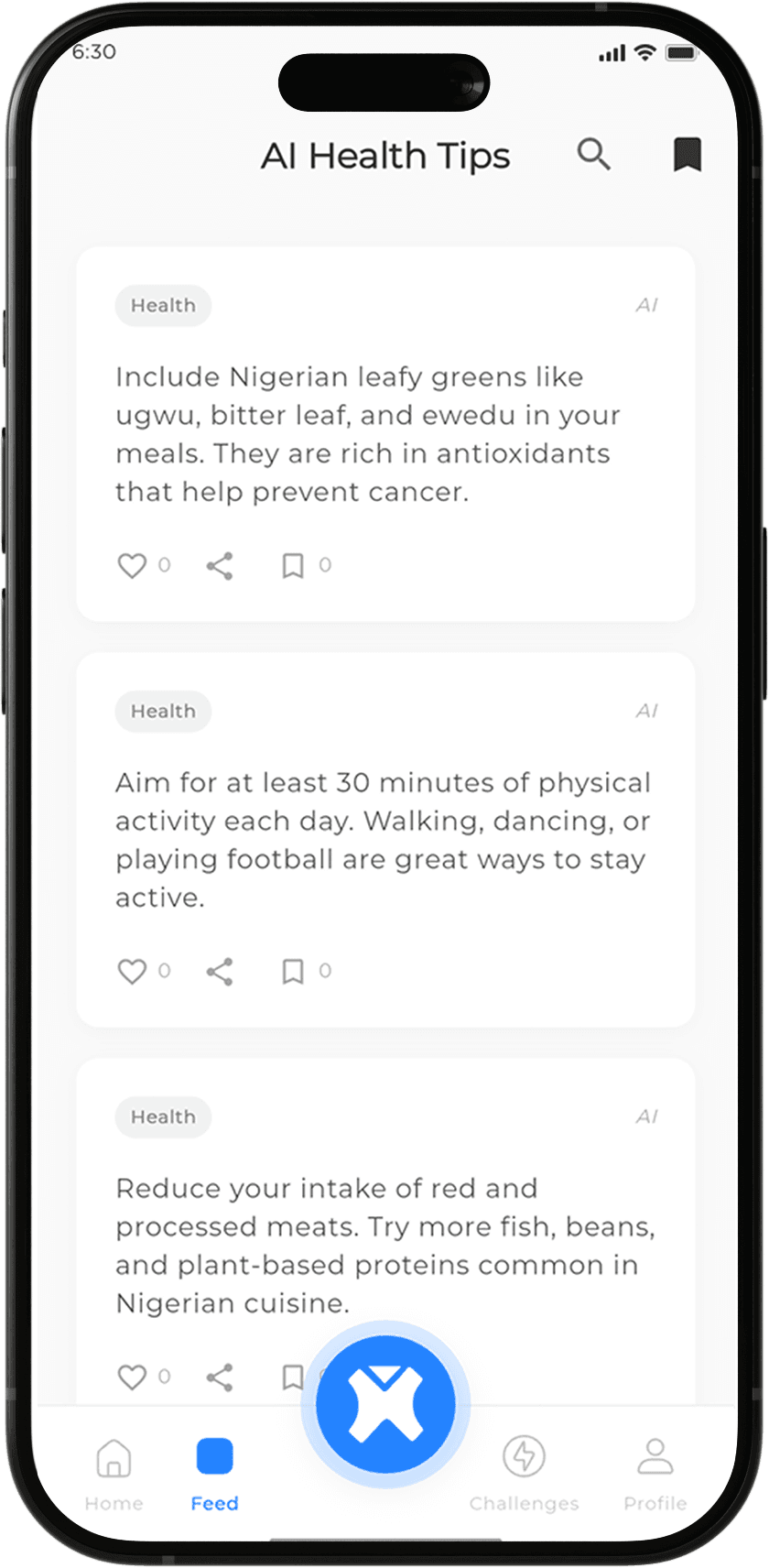
Feed: The Snackable Magazine
Modular Tip Cards replace intimidating articles. Each card features a bold takeaway, an accessible explanation, and verified medical source attribution (e.g., WHO, NCI) with 1-tap save and WhatsApp sharing.
UX Rationale: Solves misinformation by combining social-media ease with verified scientific authority.
Challenges: Habit Gamification
Translates long-term goals into 5-day and 7-day micro-missions. Clear progress indicators and social participant counters leverage community accountability to maintain momentum.
UX Rationale: Closes the delayed-reward gap by providing immediate daily completion feedback.
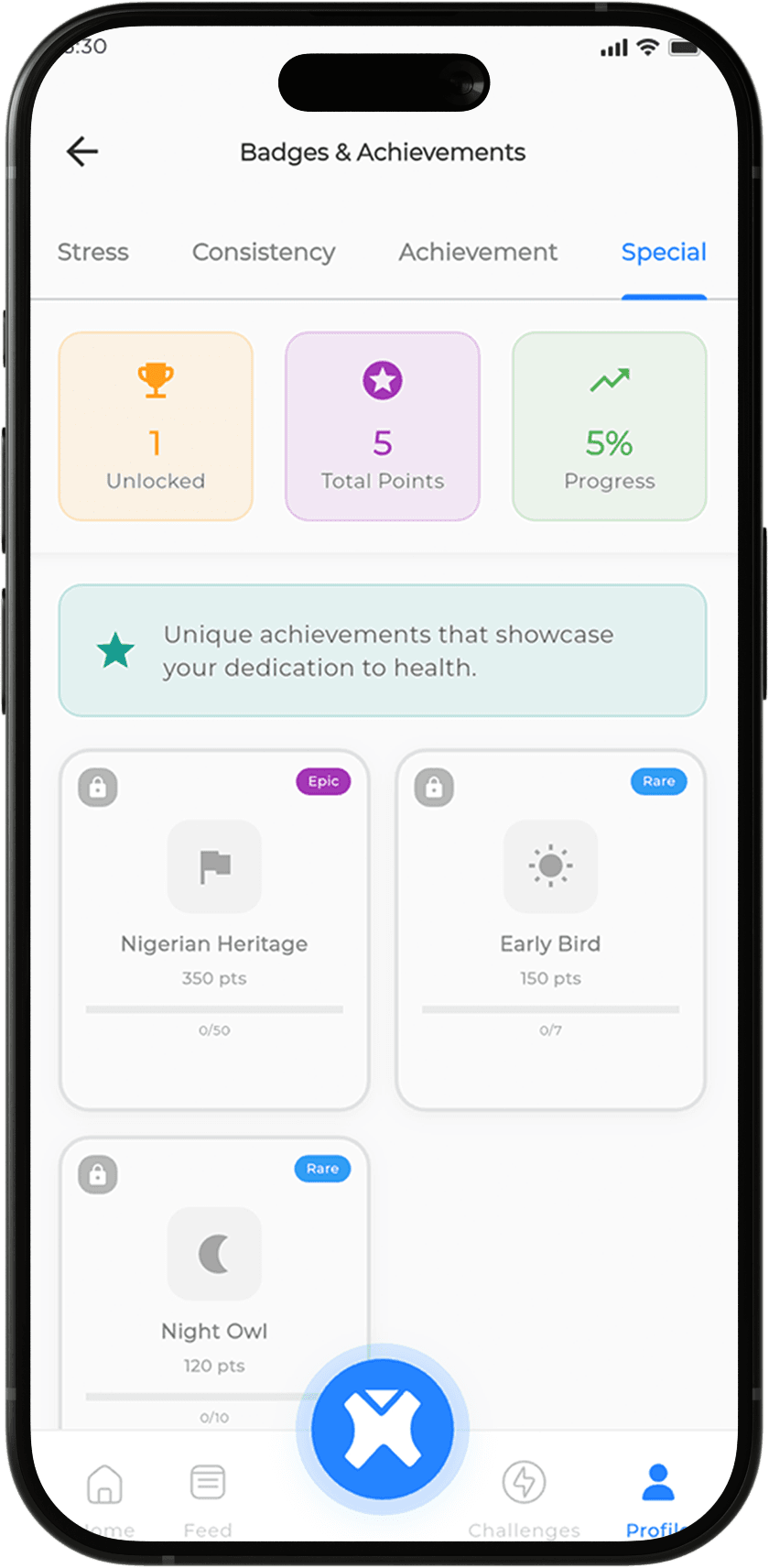
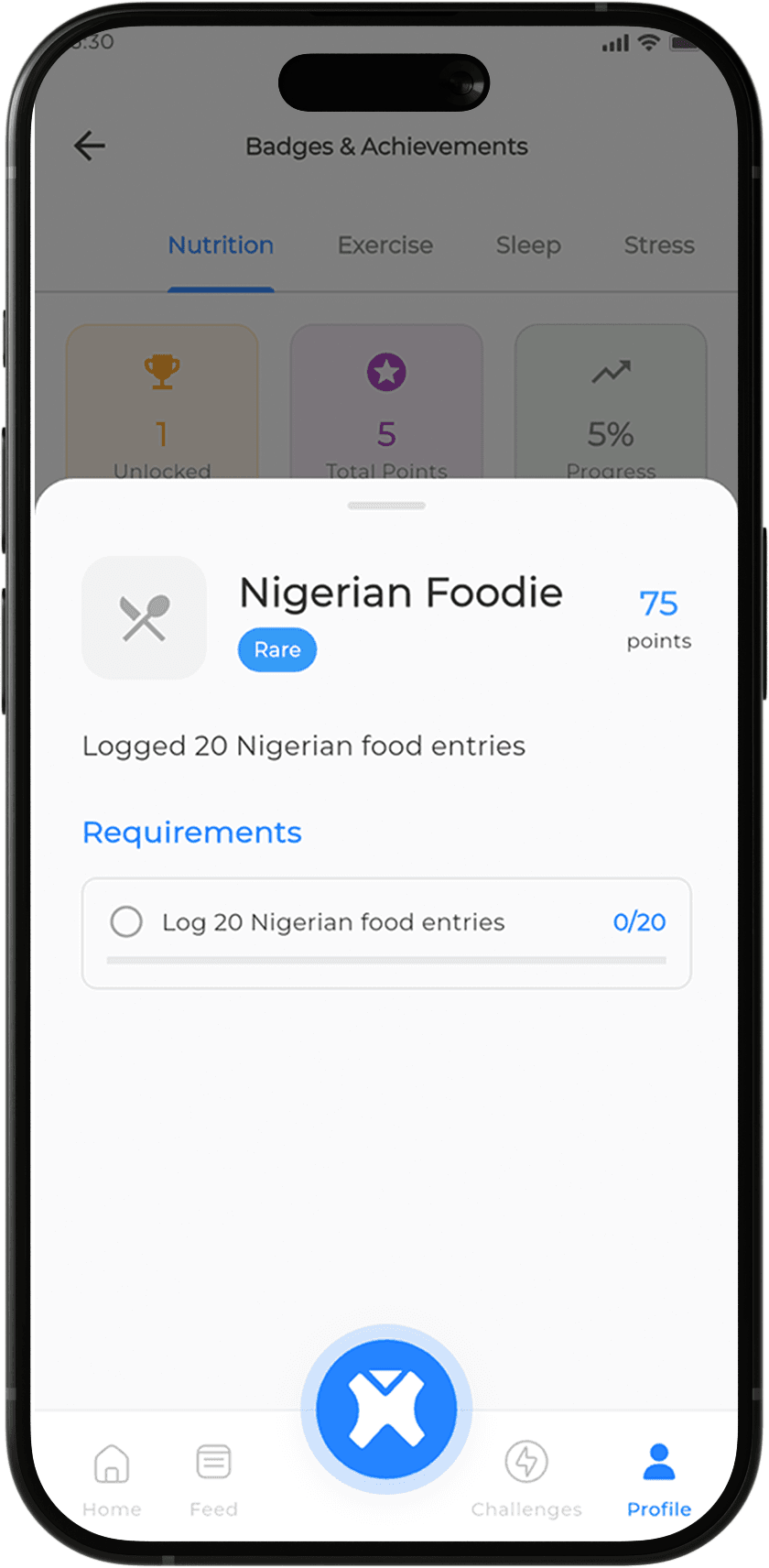
Other Pages
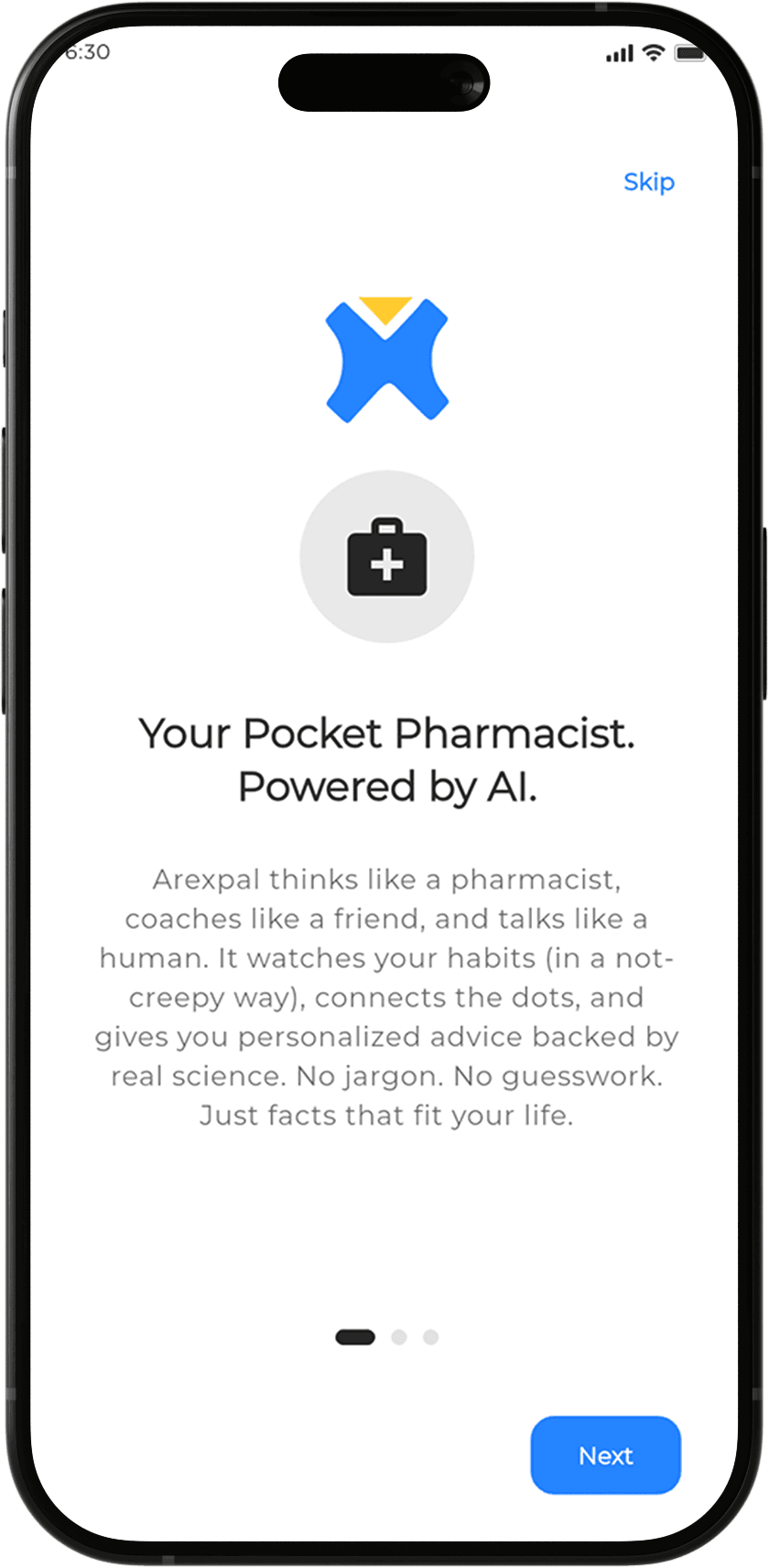
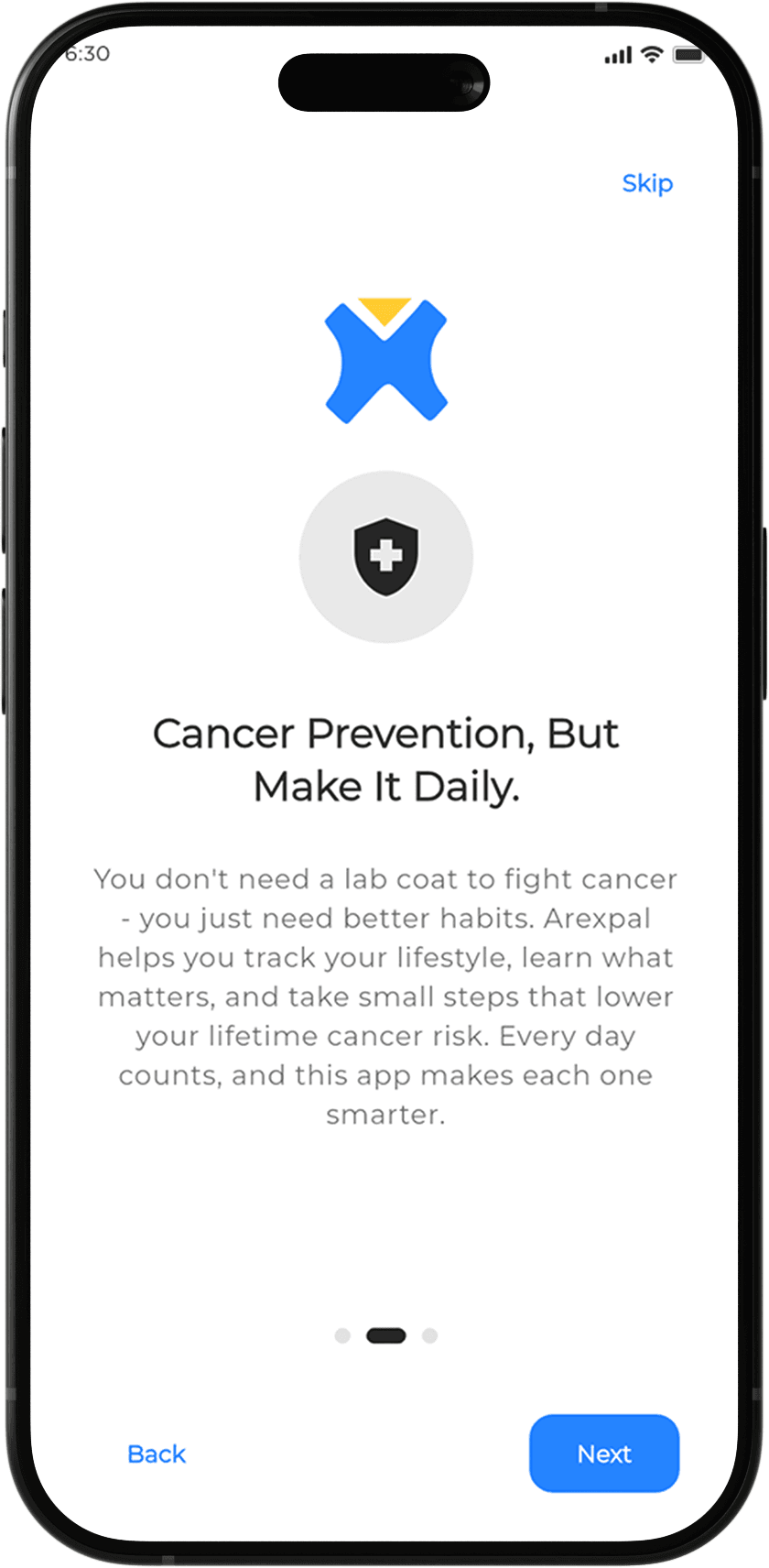
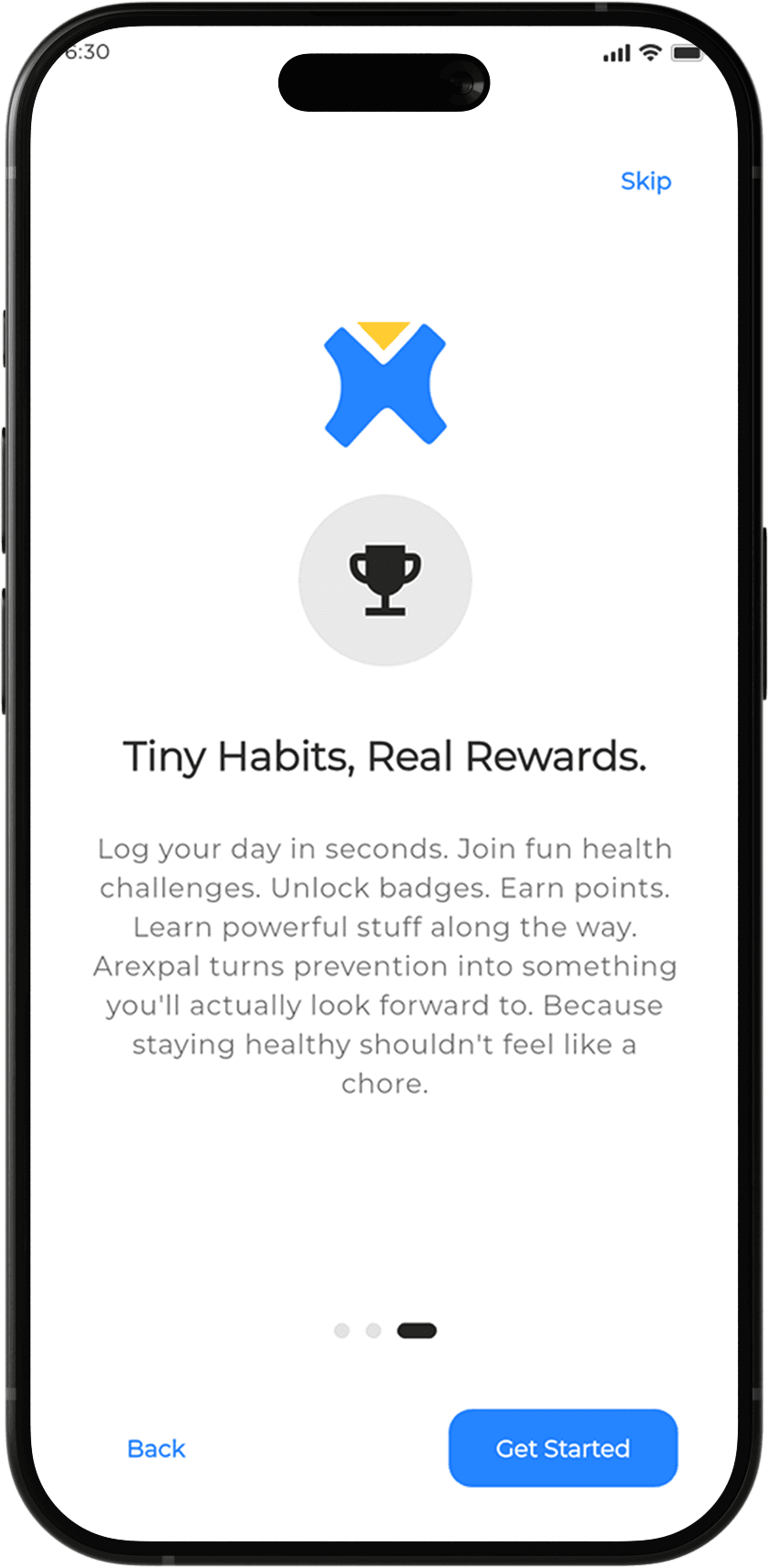
Additional screens, onboarding flows, and auxiliary interactions designed for the platform.
Prototype & Usability Validation
We validated interactive flows via moderated testing sessions with 5 representative users, testing for clarity, emotional comfort, and interaction friction.
Key Usability Takeaways
Testing validated that the conversational Diary lowered barrier to entry, but revealed that initial Challenge descriptions were too wordy. We trimmed copy by 40% to reduce decision fatigue.
Reflection: Lessons in Preventive Healthcare UX
Designing Arexpal reinforced that health UX is an exercise in emotional trust. Technology should not lecture users; it must accompany them.
What Worked
- Ethical gamification: Tying streaks to genuine self-reflection rather than arbitrary clicks kept engagement authentic.
- Conversational framing: Guided prompt chips eliminated the intimidation of blank text inputs.
- Medical collaboration: Partnering with public health advisors ensured all guidance was credible and safe.
Future Roadmap
- Passive telemetry: Connecting with Apple Health and Google Fit to automate sleep and exercise logging.
- Regional dietary models: Broadening AI suggestions to encompass diverse culinary and cultural realities across Africa.
- Safe peer circles: Moderated support spaces for cancer survivors like Aisha to share milestones securely.
“Cancer prevention starts with behavior change. Behavior change starts with a compelling, empathetic experience. Arexpal is proof that thoughtful design can serve as a genuine lifeline.”