Case Study • EdTech & Applied AI • 2024

PansGPT: AI Academic Co-Pilot

Designing an AI-powered academic learning platform for pharmacy students at the University of Jos.

RoleSole UX Designer
InstitutionUniversity of Jos
PlatformsWeb • Android • iOS
PansGPT iconPansGPT
Built for Pharmacy School

Your AI-powered pharmacy study assistant

Project Overview

Where This Story Begins

Pharmacy school in Nigeria is brutal, not because the students aren't capable, but because the gap between what they need to master and what's realistically achievable in the time available is enormous.

And here's the thing nobody says out loud: when a student is stuck at 11pm trying to understand a mechanism of action, there is genuinely nobody to call. Lecturers aren't available. Peers are equally lost. And the internet will always tell you something. It just might not be right.

Another dangerous reality is that ChatGPT and its cousins are trained on the open internet, a vast dataset that confidently produces fluent, plausible, and sometimes wrong answers. Students tried it. Several described the same specific anxiety: they could never be sure if what the model told them was curriculum-aligned, or just... convincing. For most subjects, that's an inconvenience. For pharmaceutical sciences, that's a liability.


Definition

What is PansGPT?

PansGPT is a closed-loop AI study platform built for pharmacy students at the University of Jos, Nigeria. It combines a document Reader, AI Chat, Notes, Quiz engine, and analytics — all anchored to verified curriculum content through Retrieval-Augmented Generation.

Research

Research & Problem Framing

Before any wireframe existed, I needed to understand how pharmacy students actually studied. Conversations with students surfaced three consistent pain points that became the product's entire design foundation.

01

Drowning in Volume

With pharmacology modules spanning hundreds of pages, students often struggle to process information at the pace required by such a dense curriculum.

Insight:The challenge lies in comprehension rather than access. Students need to transform complex data into lasting and practical knowledge.

02

Nowhere to Go When Stuck

Being stuck is a critical learning moment, yet it is when pharmacy students feel most isolated. Infrequent office hours and peer limitations leave many clinical questions unanswered.

Insight:Instead of generic search results, students require a dedicated expert capable of providing context-specific explanations based on their actual coursework.

03

A Schedule That Leaves No Room to Wander

Pharmacy students do not just have lectures. They have lab practicals, assignments, clinical rotations, coursework submissions, and study group commitments stacked on top of each other week after week. The idea of moving between multiple apps, websites, or resources to understand a single concept is inefficient. When time is this scarce, context switching is a tax students cannot afford to pay.

Insight:Every extra step between confusion and understanding is a place the study session ends. The platform needed to contain the entire resolution loop in one place.

The Design Mandate

The goal was to create a unified ecosystem where students can access their curriculum, receive AI-powered explanations, and track their academic progress in one seamless experience.

User Personas

Understanding Our Users

To ensure PansGPT solves real problems, we developed primary personas based on actual pharmacy students, mapping out their behaviors, goals, and frustrations.

Amara Okafor

Amara Okafor

21, 300 Level (Third Year)

Pharm.D Pharmaceutical Sciences

University of Jos

I don't have time to not understand something the first time. I need whatever I'm reading to actually make sense before I move on.

About

A disciplined first generation health science student carrying the pressure to succeed. While previously excelling through handwritten notes and perfect attendance, third year's immense volume has overwhelmed her. For the first time, she is reading without understanding, spending longer hours but retaining less.

Daily Reality

Her week is consumed by back to back lectures, labs, and deadlines. With no laptop, she relies entirely on her Android phone for the brief two hour study windows she has before exhaustion sets in each evening.

Goals

  • Understand pharmacology deeply enough for application, not just exam recall
  • Maximize efficiency of her limited two hour evening study window
  • Ensure study materials align perfectly with her assessment criteria
  • Find trustworthy, curriculum accurate answers without second guessing

Frustrations

  • Reading dense notes without real time avenues for clarification
  • Generic AI tools providing confident but unverifiable answers
  • Losing context and position when switching between study resources
  • Putting in long hours that do not translate into exam success

Platform Usage

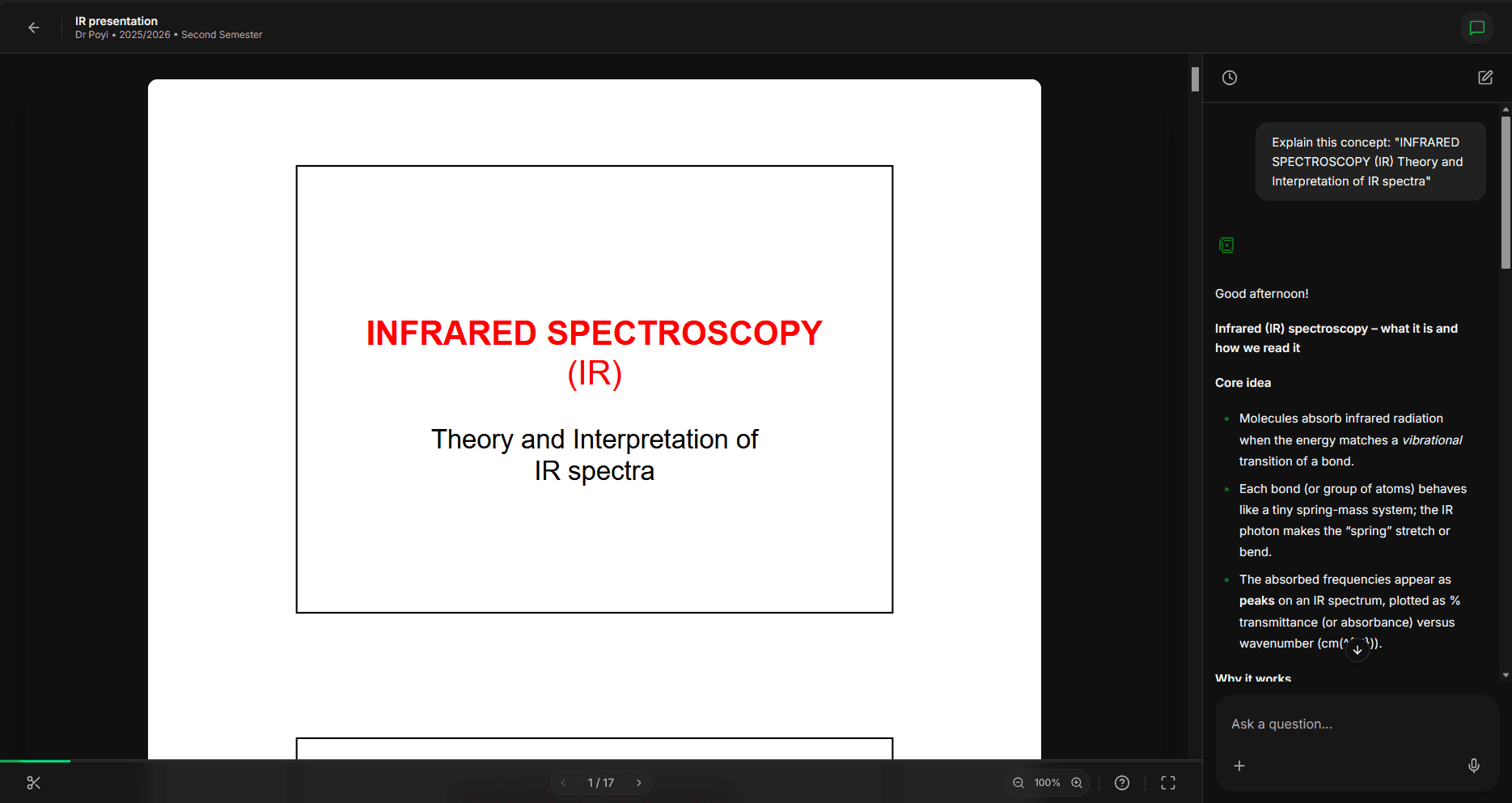
Relies primarily on the Reader. When confused, she highlights text and uses 'Explain' to break down complex mechanisms. If questions persist, she escalates to 'Chat'. She obsessively saves these simplified explanations to Notes by concept, effectively building a personalized, curriculum aligned study guide for exam season.

Tunde Adeyemi

Tunde Adeyemi

23, 600 Level (Final Year)

Pharm.D Pharmaceutical Sciences

University of Jos

I don't need it to teach me everything. I need it to show me exactly where my understanding breaks down and then help me fix that specific thing.

About

A pragmatic final year student focused on post graduation clinical practice. Known among peers for his ability to explain complex problems clearly. With shrinking free time, he feels the pressure of translating academic knowledge into reliable clinical action where careers are made.

Daily Reality

Studies strictly in short, focused bursts around clinical postings using only his phone. After a generic AI tool provided dangerous dosage contradictions, he is highly skeptical of tools that hallucinate. He is quietly competitive, tracking personal progress through analytics.

Goals

  • Consolidate six years of study into exam ready, clinical knowledge
  • Practice with advanced questions reflecting final year difficulty
  • Clarify clinical questions instantly during off site hospital postings
  • Rely entirely on AI answers anchored to the Nigerian curriculum

Frustrations

  • Basic quiz tools that fail to challenge his final year understanding
  • Generic AI models providing confident but factually incorrect dosages
  • Study platforms requiring long, uninterrupted time blocks he lacks
  • Scattered knowledge across chats, PDFs, and tabs without central organization

Platform Usage

Primary entry point is 'Quiz', generating daily, high difficulty assessments to pinpoint knowledge gaps. He then uses 'Reader' targetedly, employing 'Summarise' for quick knowledge reactivation. He uses 'Chat' exclusively for clinical scenario walkthroughs, valuing it because it strictly adheres to his curriculum rather than general medical literature.

Learning Loop

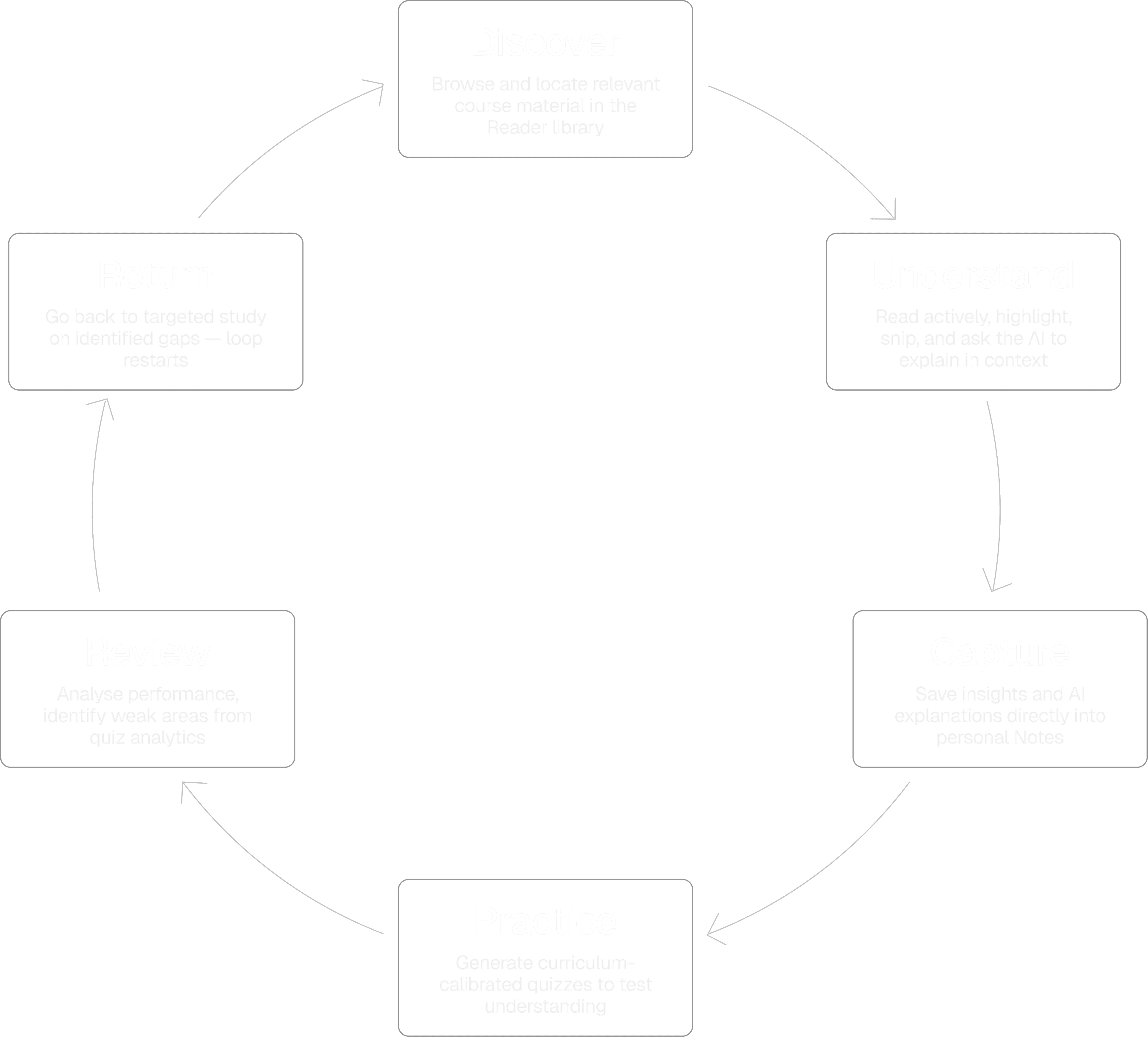
The Learning Loop

Everything in PansGPT maps to a six-stage loop. It is not just a feature list but a cycle students repeat throughout the semester to deepen their understanding.

PansGPT Learning Loop

Information Architecture

A clean, hierarchical view of the platform's role-based navigation structure. We maintain three distinct user roles with their own navigational logic to ensure focus.

User Journey Maps

Five journey maps define the core behavioural paths through the product.

Journey A — New Student Activation

Goal: Land on the platform, understand its value quickly, and complete a first meaningful learning action — without confusion or dead ends.

StageTouchpointUX NotesRisk / Opportunity
1. DiscoveryPublic landing pageStudent reads the value prop. The "closed-loop curriculum AI" claim must be immediate — this audience has been burned by generic AI before.Vague AI positioning loses skeptical students on the first scroll.
2. EvaluationFAQ, About, How It WorksStudent looks for specificity: 'Is this for my university? My course?' University of Jos must be prominent and early.Generic EdTech copy that doesn't signal curriculum-specificity loses this audience.
3. Sign UpAuth form — signup flowLow-friction signup. Password rules shown before submission, not after failure. Error messages are specific and instructive.Any auth friction here is disproportionately costly — motivation is high but not unlimited.
4. First SessionAuth callback → workspaceStudent lands in the app for the first time. Guided first-run loop orients them through one complete cycle without blocking their first action.High feature density without a guiding hand creates paralysis. Student closes the tab.
5. First ActionReader or ChatStudent opens their first document or asks their first question. AI responds with a curriculum-anchored answer. This is the moment trust is formed — or broken.A generic or off-curriculum first response destroys credibility permanently.
6. Loop EntryNotes save / Quiz promptAfter first success, student is gently prompted toward the next step — save to notes, or take a short quiz. The loop concept is introduced through action, not instruction.No next-step prompt = one-time use. The student never returns.

User Flows

Nine core flows define how users move through the product. Each was designed to eliminate dead ends and keep context intact.

Reader Active Study Interaction

Feature Deep-Dive

Every surface in PansGPT is engineered for a specific moment in the learning loop: discovering verified curriculum slides, reading with contextual AI clarification, and reinforcing retention through automated assessment.

Reader Surface

The Reader — The Heart of the Product

If the Chat is PansGPT's voice, the Reader is its soul.

Views:
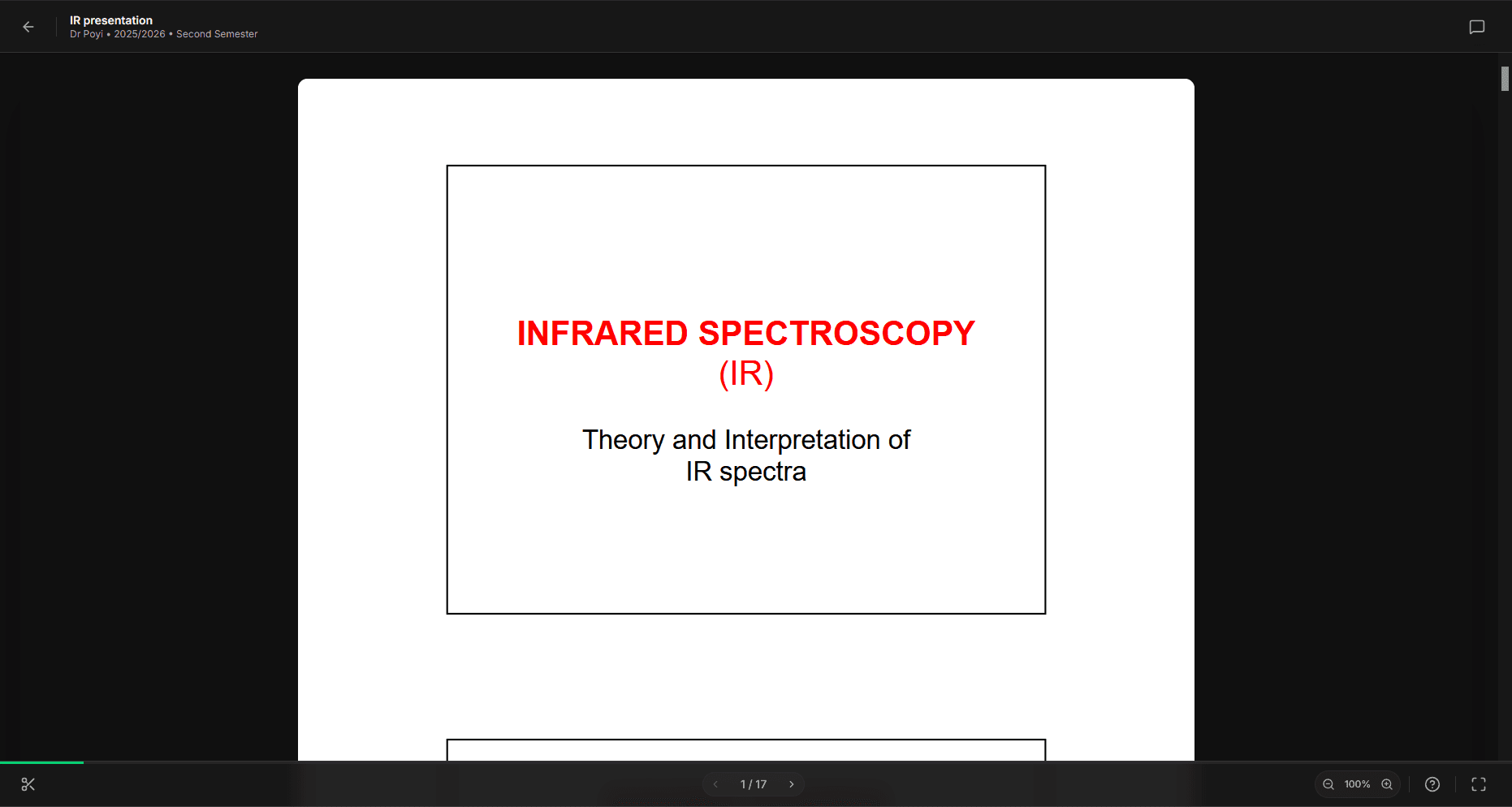
Reader• Live Platform Screen
The Reader — The Heart of the Product

Library & Discovery

Documents grouped by course, then by topic — mirroring students' mental models. Reading progress indicators reduce reorientation time and create a quiet completeness signal. Last-opened document continuity means zero friction on return.

The PDF Study Environment

The in-app reader exists because leaving the app breaks the learning loop entirely. Page navigation, zoom, and progress tracking are persistent. Desktop provides side-by-side reading-and-AI. Mobile uses focused single-column with contextual controls.

Snip & Ask — Highest-Value Interaction

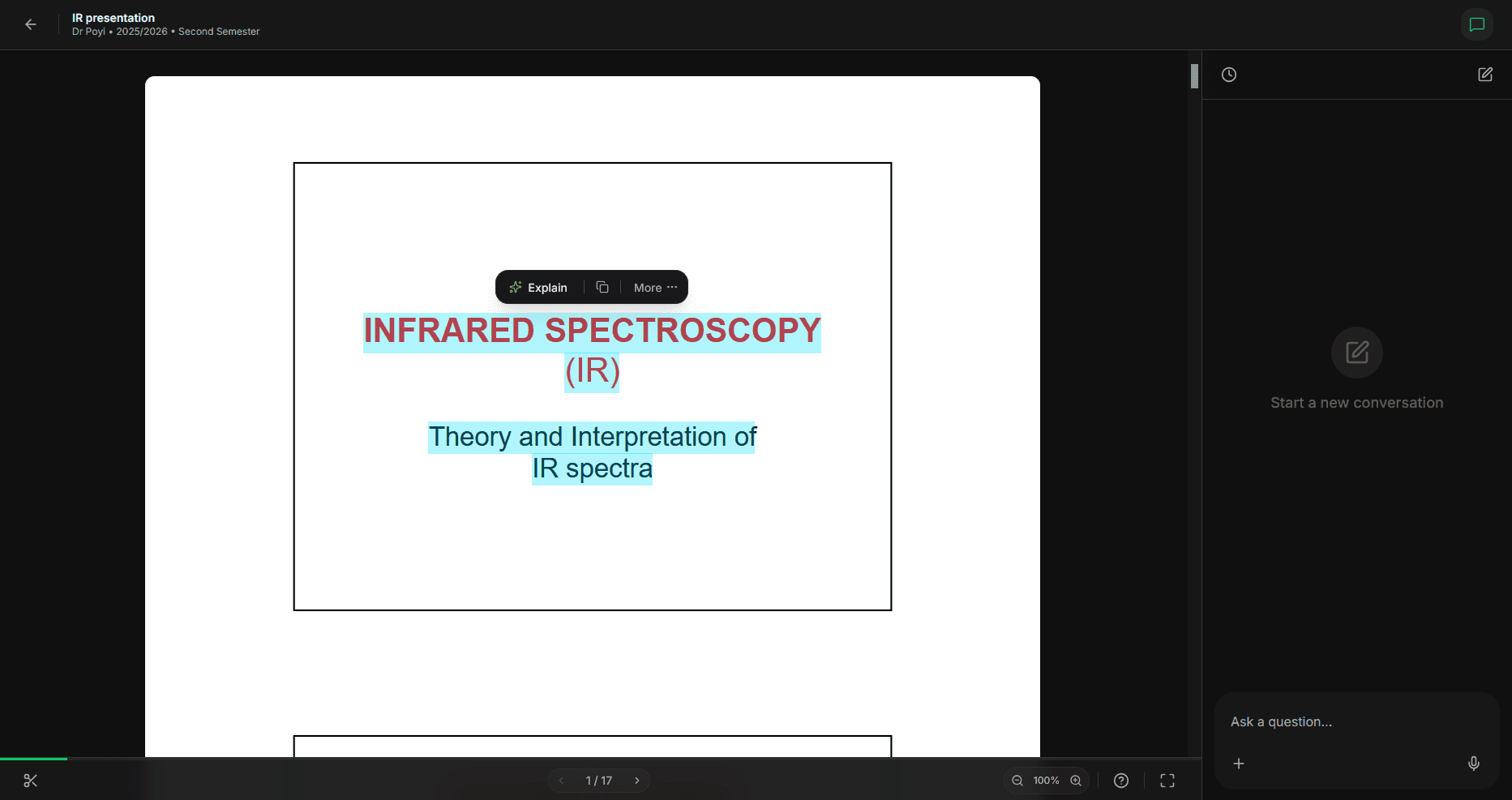
Student highlights a passage. Contextual options appear: Explain, Summarise, Send to Chat, Save to Notes. The AI response appears adjacent without displacing reading context. Reading position is preserved throughout.

Snip & Ask Action Mapping
ExplainDon't understand — need it broken down simply
SummariseToo dense — need key high-yield takeaways extracted
Send to ChatNeed a real conversation — one question won't be enough
Save to NotesUnderstood it — want to keep for long-term revision
Interface Exploration

Other Pages

Additional screens, onboarding flows, and auxiliary interactions designed for the platform.

Closed-Loop Reader & AI Synthesis
Contextual Snip & Explain Menu
Full Lecture Presentation View
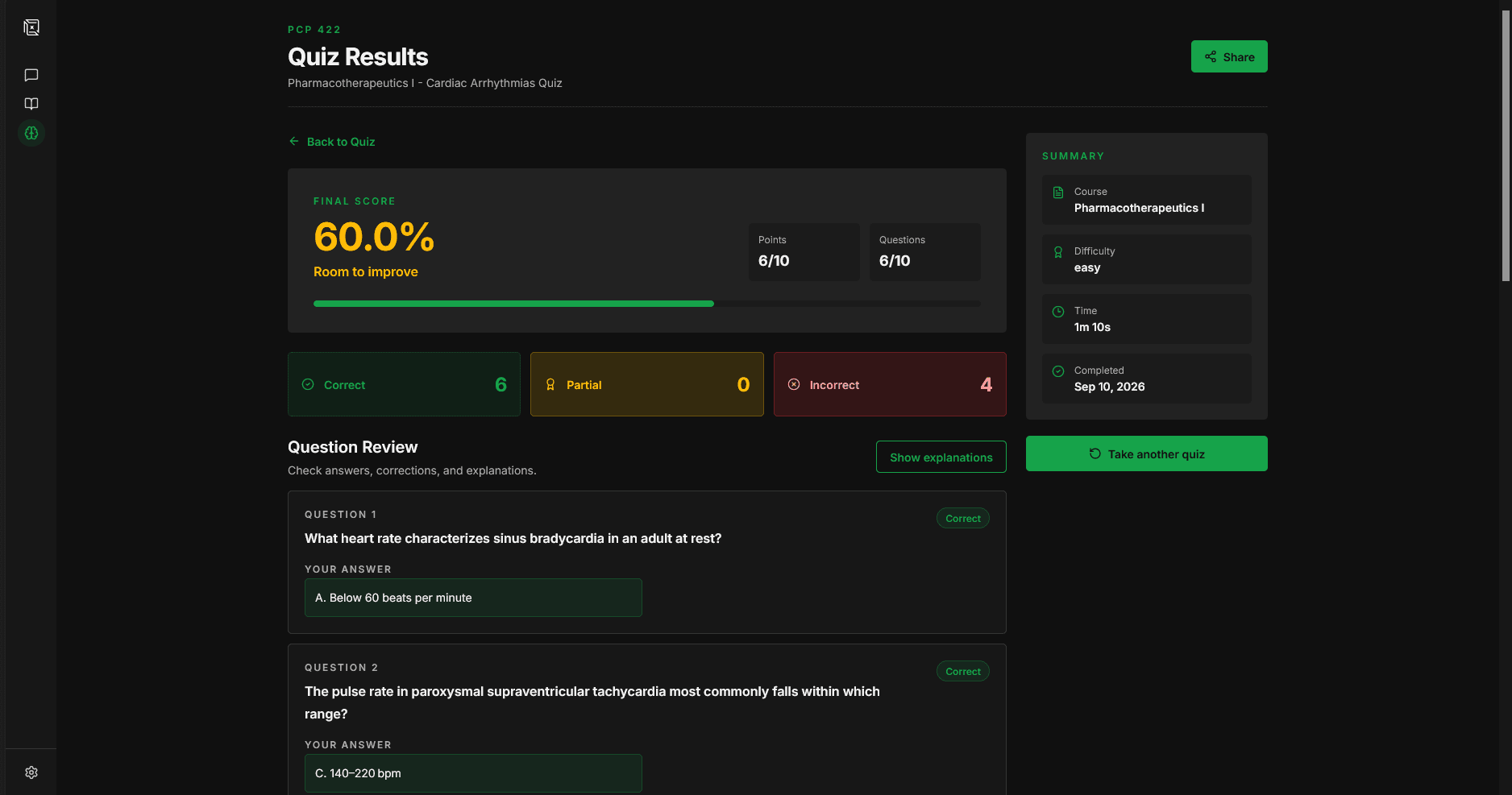
Detailed Performance & Question Review
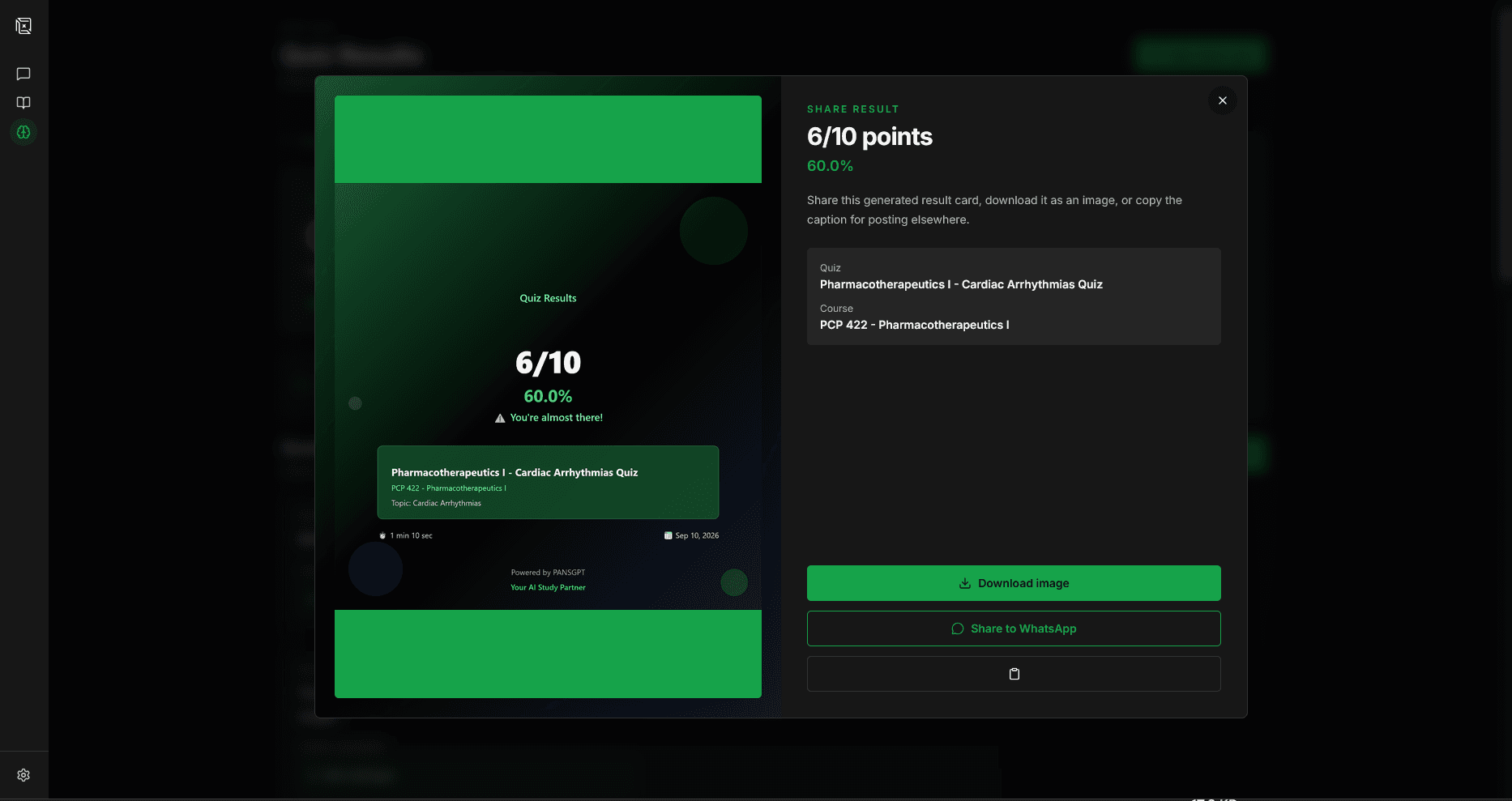
Social Scorecard for WhatsApp Study Groups
Screen 1 of 10Closed-Loop Reader & AI Synthesis

Designing for Imperfect Conditions

PansGPT operates where internet connectivity is genuinely variable — not hypothetically, but in practice, for students studying in Nigerian cities and campuses.

Loading skeletons

Prevents layout shift, signals active work

Descriptive progress

Specific stage descriptions, not generic spinners

Retry co-location

Retry buttons at the failure state, not in a separate menu

Offline indicator

Clear offline state — students know it's connection, not a crash

Error messaging

Every error says what happened, why, and what to do next

Confirmation barriers

Proportionate to action severity

Measurement Framework

“A design decision without a measurement framework is a hypothesis.”

These KPIs track the health of the learning loop and the impact of every UX improvement across the product.

Activation

First-session adoption and onboarding completion

01

Time to first meaningful action

How quickly new students complete a first AI interaction — chat, snip, or quiz

02

First-day loop completion rate

% of new users who engage with 3+ surfaces in their first session

03

First-week quiz generation rate

% of new users who generate a quiz within 7 days

04

Guided tour completion rate

% of first-run users who complete the full guided loop

Engagement

Habitual study routines and cross-feature workflows

01

Weekly active users per surface

Which surfaces are used weekly — flags surfaces with weak engagement

02

Cross-surface transition rate

How often students move between surfaces in one session

03

Sessions per learner per week

Depth of engagement — multiple sessions per week signals habitual return

04

Notes creation per session

Active processing rate — synthesising, not passively reading

05

Reader AI action rate

How often Snip & Ask is triggered per reading session

Learning Outcomes

Measurable knowledge retention and targeted revision

01

Quiz score improvement over time

Whether repeated quiz use produces measurable knowledge gains

02

Weak-topic revisit rate

Whether next-step prompts generate actual return study on identified gaps

03

Quiz retry rate on failed topics

% of students who generate a second quiz on a sub-threshold topic

04

Reader time per document

Whether students are reading substantively or skimming — proxy for study depth

Reliability

Error recovery, connection resilience and AI uptime

01

Retry success conversion rate

% of retry actions that complete successfully — are recovery paths effective?

02

Offline interruption recovery rate

% of connectivity-interrupted sessions that successfully resume

03

Quiz generation failure rate

% of quiz requests that fail — direct indicator of AI pipeline reliability

04

Document processing success rate

% of uploads that complete ingestion on first attempt

Admin Operations

Course material moderation and faculty review velocity

01

Content ingestion success rate

% of documents that process successfully without retry

02

Upload to AI-accessible latency

End-to-end time from document upload to active retrieval by the AI

03

Lecturer moderation turnaround

How quickly submitted materials receive an approval or rejection decision

04

Feedback resolution cycle time

Time from student report submission to admin resolution

Reflection

What Worked

Loop-first architecture — Designing each surface around a specific moment in a six-stage learning cycle produced a product where cross-surface transitions feel natural.

Notes integration— The ability to capture curriculum-anchored AI explanations into a persistent knowledge base without leaving the study context is the product's most distinctive experience advantage.

Admin governance — The processing status system reduced the failure mode where admins discovered ingestion problems only after students reported AI gaps.

What I'd Do Differently

Mobile gesture interaction— Gesture-based snippet capture is the interaction I'd prototype much earlier and push harder for before the first release.

Personalisation architecture — The data exists from day one. The design to surface it as proactive guidance only partially exists. That gap is the most important UX frontier remaining.

KPI framework timing— I'd define the KPI framework before designing, not alongside it. Pre-defining success produces sharper decisions.

The Bigger Lesson

“The technology is only as valuable as the trust it earns. PansGPT's most important design decision was the commitment to curriculum-anchored, hallucination-resistant responses as a non-negotiable product requirement. Designing for a domain where credibility has real consequences for patient safety makes every decision feel weightier. I think that weight made the work better.”